

#019 | 31 Mar 2026
In This Article
Main Story
Why Mobile App Analytics Feels Right But Still Fails
A team ships a new feature they’ve been working on for weeks. The problem is clear, the solution makes sense, and the release goes out smoothly. A few days later, they check their analytics dashboard.
At first glance, everything looks fine. There’s some adoption, session time is slightly up, and retention hasn’t dropped. By most metrics, it looks like a successful release.
But it doesn’t feel like one.
Nothing has really changed. The product doesn’t feel meaningfully better, and there’s no clear signal that anything improved-just movement in the numbers.
So they dig deeper. They add more tracking, define more events, and build detailed funnels. Now they can see exactly what users are doing-where they click, how they move, where they drop.
And yet, the original question still remains:
Did this feature actually make the product better?
This is where most analytics systems start to break down.
They capture activity extremely well, but they don’t capture meaning. You can see what users are doing, but not whether it worked for them.
A user spending more time might be engaged, or just confused. A returning user might be finding value, or still trying to figure things out. From the dashboard’s perspective, both look the same.
Think of it like watching a store through a camera.
You can see how people move, where they stop, how long they stay. But you can’t tell who actually found what they came for.
That difference-between movement and outcome-is exactly what most analytics misses.
Every product has a moment where it finally works for the user. The first meaningful action. The first real result. Before that, they’re still evaluating. After that, they start using the product with intent.
But most analytics doesn’t measure this moment directly. It tracks everything around it, not the thing itself.
So teams end up optimizing what’s visible, not what’s meaningful.
❝ If your analytics cannot tell you when a user has experienced real value, it cannot tell you whether your product is improving. ❞
The teams that get this right don’t track more-they just look at things differently. They stop focusing on what users did, and start focusing on whether users succeeded.
Because once you can see that clearly, analytics stops being a collection of charts.
It becomes a way to understand whether your product is actually working.
👇 Read the full breakdown: Mobile App Analytics: Why Metrics Fail and How to Fix Them
Recent Blogs


What’s new in Digia?
GraphQL Integration
For most teams, data doesn’t come from a single clean source. It’s scattered across APIs, services, and systems - often requiring engineering effort just to pull the right fields together before you can even start analyzing anything.
GraphQL changes that by letting you ask for exactly what you need, in the shape you need it.

With this update, you can now connect your GraphQL endpoints inside Digia, write and test queries, and fetch structured data directly into your workflows, without building additional layers just to access it.
It’s a small step on the surface, but it removes a lot of friction between getting data and actually using it to understand your product.
Read here to know more → API Integrations
Test Your GraphQL Query at Digia
News
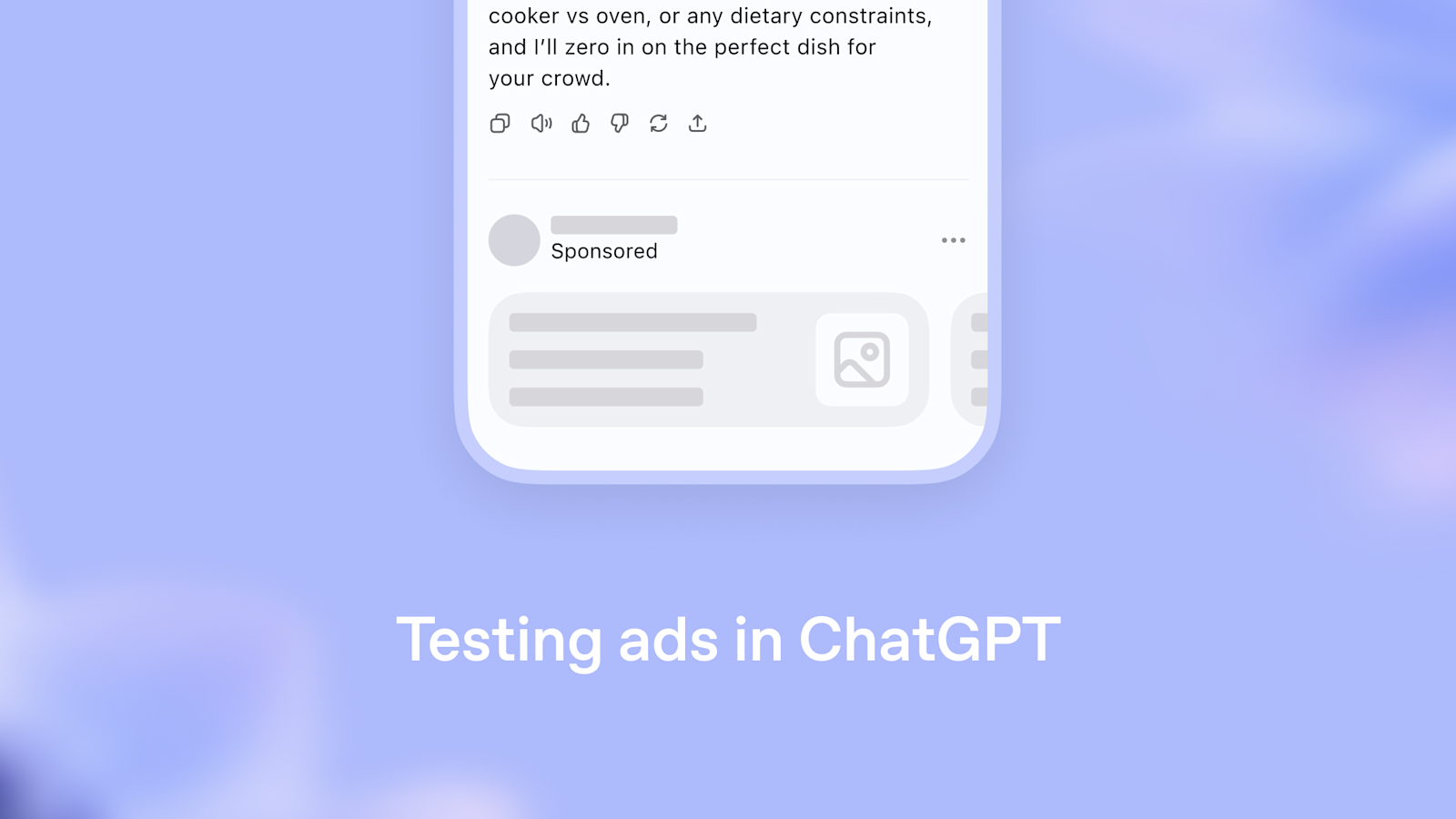
Ads For Free ChatGpt User in US
OpenAI has started testing ads inside ChatGPT for Free and Go users in the U.S., introducing a new monetization layer to the product. These ads appear as clearly labeled sponsored content below responses and are positioned as a way to fund broader access to AI without affecting the quality of answers.
While the rollout is framed as a test, the shift is structurally significant. It signals a move toward ChatGPT becoming not just a tool, but a discovery layer - where answers and commercial intent begin to coexist. For product and content teams, this marks the early stages of how visibility inside AI interfaces may evolve.
Your features are only valuable if users adopt them.
AI makes it easy to build new features. But building isn’t the bottleneck anymore - discovery and adoption are. If users don’t encounter a feature in the right context, at the right moment, it simply doesn’t get used.
The result? Missed engagement and wasted revenue opportunities.
Digia solves the distribution problem.
Ship in-app experiences directly on top of your existing data stack - without waiting for an app release cycle or forcing updates.
No code changes.
No release cycle.
No Play Store or App Store update.
Your feature or nudge goes live instantly and your data stays where it belongs.
Teams at BBlunt, Dezerv, and Omli use Digia daily to ship experiments and full features without pushing app updates.
Try Digia for free → Digia Studio
Socials